
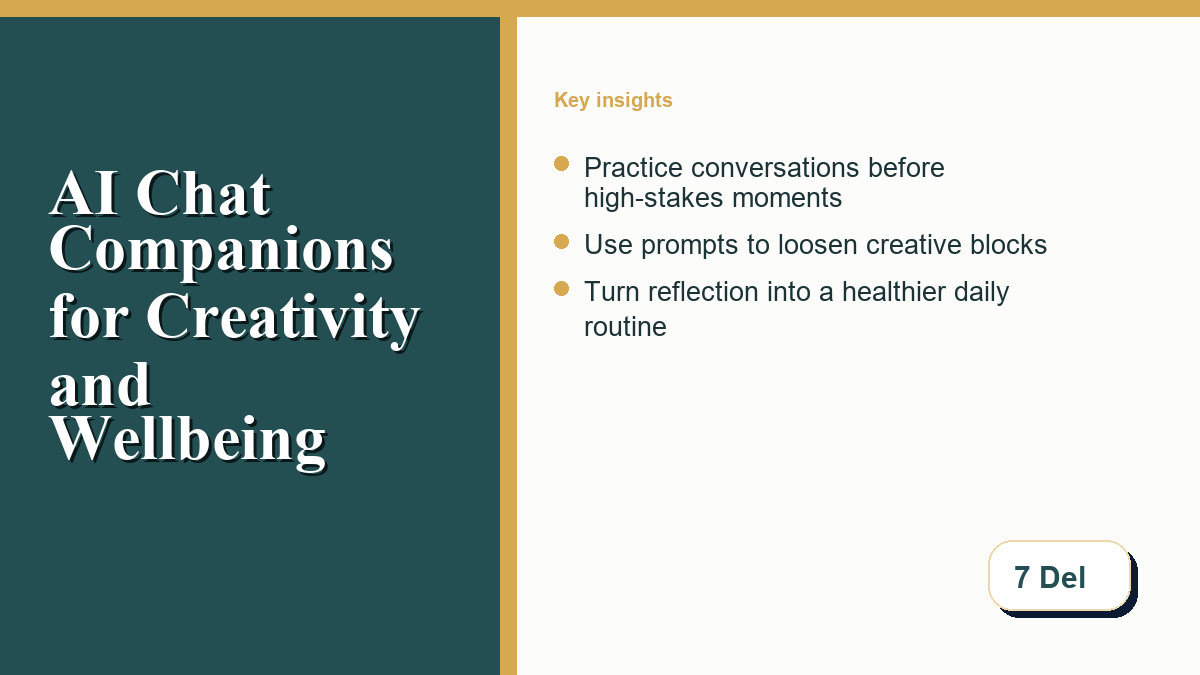
As we navigate the mid-2020s, the intersection of technology and self-improvement has evolved in ways that once seemed reserved for science fiction. Artificial intelligence is no longer just a backend tool for processing spreadsheets or automating emails; it is increasingly stepping into our lives as an interactive partner for personal development. Many individuals looking for creative brainstorms, conversation practice, or reflective journaling are turning to an AI character chat app like PixelChat AI to act as a simulated conversation partner. When approached with a mindful and deliberate strategy, these tools offer a low-stakes environment to experiment with language, work through creative blocks, and practice expressing thoughts clearly before sharing them with the world.
This new wave of digital integration offers both unique opportunities and novel challenges for modern wellness. Incorporating advanced language models into our personal growth routines isn’t about replacing human connection, but rather using technology to sharpen our minds and refine our communication. Embracing interactive tech in a healthy way is a key component of modern self-improvement. By learning how to leverage these digital assistants constructively, you can take meaningful steps toward igniting your potential and adopting strategies for personal growth and development.
Understanding the Role of AI Chat Companions in Daily Life
In 2026, AI chat companions have transitioned from novel tech demos into highly responsive, contextual partners. These applications utilize natural language processing to mimic human dialogue, allowing users to discuss ideas, ask open-ended questions, and explore hypothetical scenarios. Unlike standard search engines that deliver a list of links, an AI companion responds with conversational prose, adjusting its tone and vocabulary to suit the user’s preferences. This makes them highly engaging tools for structured reflection.
However, understanding the exact nature of this technology is crucial for maintaining a healthy relationship with it. An AI chat companion is not conscious, nor does it possess genuine empathy or lived experience. It is a sophisticated language predictor that generates text based on patterns in the data it was trained on. Because of this, these platforms should be viewed as interactive mirrors: tools that reflect your own thoughts, prompts, and ideas back to you in a structured format. While they can be excellent for personal exploration, they cannot substitute for the rich, reciprocal interactions of real-world relationships. In fact, maintaining deep, authentic relationships remains a cornerstone of our wellbeing, as emphasized in the U.S. Surgeon General’s Advisory on Social Connection and Community, which warns against replacing human bonds with purely digital interactions.
Sparking Creativity and Beating Writer’s Block
One of the most immediate and practical applications of AI chat companions is as a collaborative partner for creative projects. Whether you are a professional writer struggling with an empty page, a student trying to outline a complex essay, or an entrepreneur brainstorming names for a new business, AI can serve as a catalyst for inspiration. By engaging in a back-and-forth conversation, you can pressure-test concepts, explore alternative narrative structures, and quickly generate multiple variations of an idea.
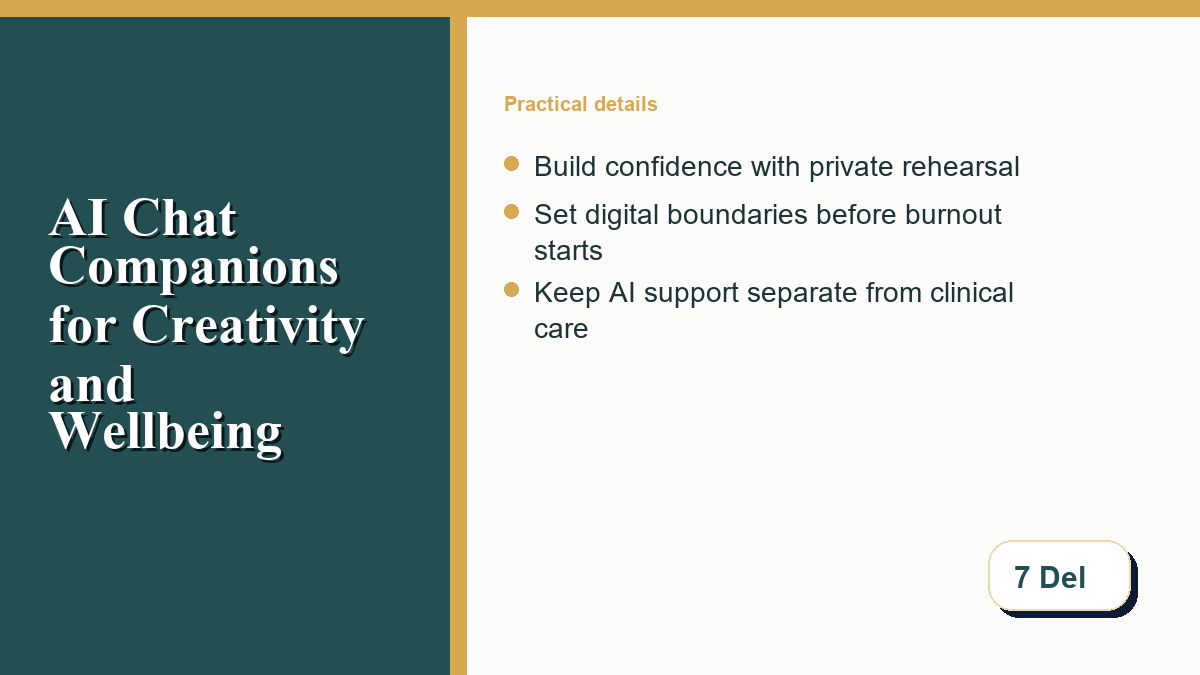
For example, if you are writing a story, you can prompt the AI to roleplay as one of your characters. This allows you to interview the character, exploring their motivations, fears, and speech patterns in a dynamic way. If you are developing professional objectives, you can chat with the assistant to break down massive tasks into smaller, manageable milestones. This structured, interactive method of organizing ideas is highly effective, aligning perfectly with standard frameworks for achieving career goals and managing professional milestones. The AI doesn’t write the project for you, but it acts as a digital sounding board that helps you overcome the initial resistance of the blank page, sparking momentum and keeping your creative juices flowing.
Building Social Confidence and Conversation Rehearsal
Social anxiety and communication barriers can hinder personal growth and limit professional opportunities. For many, the fear of saying the wrong thing in a high-stakes meeting, during a difficult personal conversation, or at a social networking event can lead to avoidance. AI chat companions provide a private, zero-judgment sandbox where you can rehearse these interactions. Because the AI doesn’t judge, get offended, or remember the conversation beyond the active session, users can experiment with different communication styles and observe how a conversational partner might respond.
You can ask the AI to play the role of an interviewer, a manager conducting a salary negotiation, or a friend with whom you need to set boundaries. Practicing these scenarios helps you organize your thoughts, identify key talking points, and refine your tone. However, while roleplay is a valuable preparatory tool, it is important to remember that AI responses are highly predictable compared to human behavior. While practicing dialogue can be helpful, the American Psychological Association (APA) released a health advisory on chatbots and wellness apps emphasizing that they are not clinical tools and should not be used as a primary solution for severe social anxiety or clinical disorders. Rehearsal should serve as a stepping stone to real-world interactions, helping you build the initial confidence required to engage in authentic, human-to-human conversations.
Enhancing Reflection, Journaling, and Daily Wellbeing
Traditional journaling is a powerful tool for self-reflection, but writing in a blank notebook can sometimes feel passive or repetitive. AI chat companions can transform this practice into an interactive dialogue. Instead of simply listing the events of your day, you can prompt the AI to act as a reflective guide, asking you insightful questions about your challenges, achievements, and emotional state. This active engagement can help you unpack complex feelings, uncover hidden patterns in your daily habits, and view stressful situations from new, more balanced perspectives.
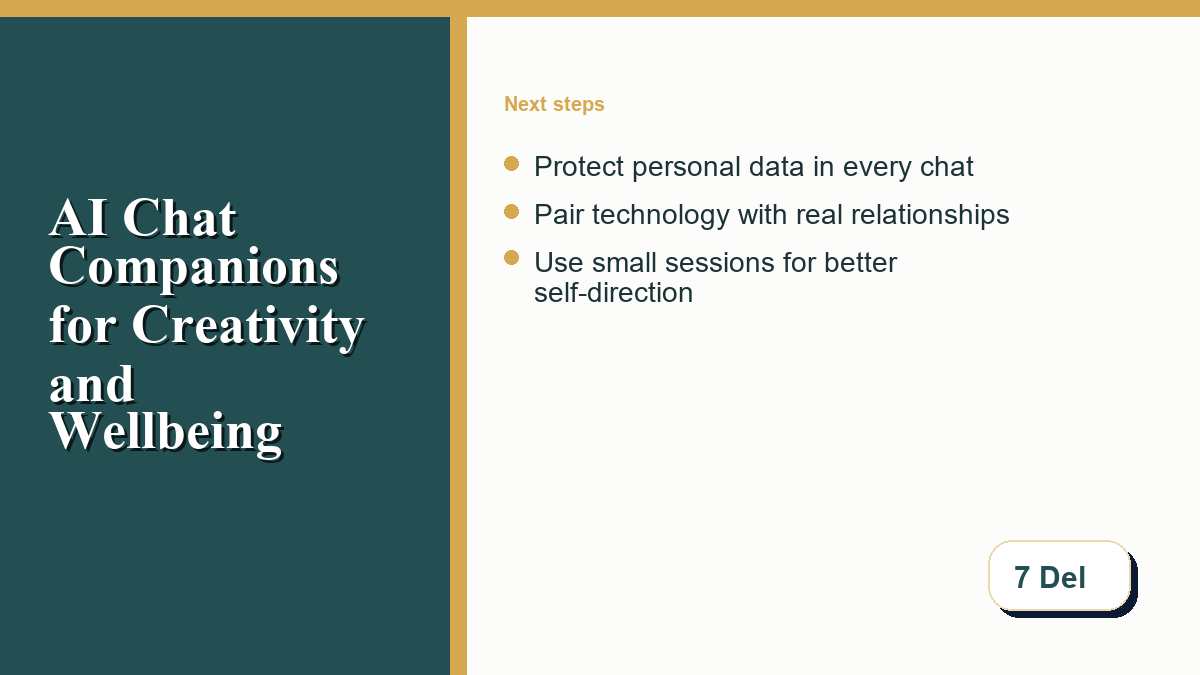
For instance, you might share: “I felt overwhelmed at work today,” and the AI can prompt you to identify the specific triggers, ask what coping strategies worked in the past, or guide you through a brief, written gratitude exercise. Integrating these interactive prompts into your daily wellness routine is a creative way to enhance self-awareness. When paired with other healthy practices, such as mindfulness, exercise, and adequate sleep, it becomes a valuable asset for boosting your mental health and wellness. To keep your mental wellbeing grounded, it is also beneficial to consult evidence-based self-care strategies, such as those recommended in the National Institute of Mental Health (NIMH) resources on caring for your mental health.
Setting Healthy Boundaries and Reducing Burnout
The convenience and responsiveness of modern AI tools can make them highly addictive. If we are not careful, we can easily fall into the habit of turning to digital companions for quick validation or comfort, neglecting our real-world responsibilities and relationships. To ensure that AI chat companions remain a positive force in your life, you must establish clear digital boundaries. Treat these tools as utilities for specific tasks, such as a 15-minute brainstorming session or a quick journaling exercise, rather than persistent entities that follow you throughout the day.
Setting boundaries with technology prevents digital fatigue and keeps you anchored in physical reality. When we spend too much time interacting with screens, our productivity suffers, and our stress levels rise. Actively managing your screen time and scheduling regular, offline breaks is essential. Learning to strike a healthy balance between tech utilization and offline downtime is a crucial skill for boosting productivity while reducing burnout. Make a habit of turning off notifications, keeping your device in another room during meals, and ensuring that your primary source of emotional support comes from friends, family, or community members.
Important Caveats: What AI Companions Cannot Do
As technology becomes more conversational, it is easy to blur the lines between machine-generated responses and human relationships. However, we must be absolutely clear about the limitations of AI. First and foremost, an AI chat companion is not a therapist, a medical professional, or a crisis counselor. It does not have clinical training, ethical accountability, or the human capacity to understand pain and distress. If you are experiencing persistent mental health struggles, severe anxiety, depression, or a crisis, you should never rely on an AI for help. Instead, reach out to qualified medical professionals, mental health counselors, or localized crisis support hotlines.
Furthermore, privacy and data security are critical concerns when interacting with any digital platform. Some AI platforms may process or retain conversation data to improve their services, depending on their privacy policy and user settings. Never share highly sensitive, private information, such as passwords, credit card numbers, or deeply confidential details about your personal life, with an AI chat companion. Treat these sessions as semi-public spaces. By keeping your interactions focused on general brainstorming, skill rehearsal, and light reflection, you can enjoy the benefits of technology while protecting your digital privacy and emotional wellbeing.
Frequently Asked Questions
Can an AI chat companion replace human therapy?
No. AI chat companions lack clinical training, diagnostic capabilities, and genuine empathy. They are tools for low-stakes journaling, brainstorming, and reflection, and should never be used as a replacement for professional therapy, counseling, or psychiatric support.
Is my data private when using AI chat companions?
Some AI platforms may log or retain user conversations to improve their services, while others offer different privacy controls. It is important to read the privacy policy of the specific app you are using and avoid sharing any personally identifiable details, financial information, or passwords during your chat sessions.
How can I use an AI companion to build real-world confidence?
You can use the AI as a simulation tool to rehearse difficult conversations, job interviews, or public speaking. Rehearsing your points in a private, low-pressure environment helps organize your thoughts, making it easier to articulate them clearly when speaking to real people.


0 Comments