
A screen-light evening does not need to be a strict digital detox. It can be a small, repeatable boundary: finish the tasks that truly need attention, download one piece of audio, put the device in a quiet mode, and listen without opening another feed. A classic Western audiobook offers a single narrative instead of an endless stream of updates.
This is an optional routine, not a treatment for insomnia, anxiety, burnout, or any other condition. Adapt the timing to your household, work, accessibility, and health needs. If sleep problems are persistent or concerning, use qualified medical guidance rather than relying on an audiobook habit.
Before choosing a start time, notice what the evening already contains: meals, caregiving, medication, exercise, cleanup, and essential communication. Place listening around those commitments instead of using it to delay them. A routine that fits the existing evening is more useful than an ambitious schedule that regularly creates conflict.
Also decide where the device will sit. Keeping it within reach for playback but outside the usual scrolling position can reduce accidental browsing. Turn off autoplay when possible so the planned chapter does not quietly expand into several hours.
Define what screen-light means for you
The goal is not to prove perfect self-control. Decide which screens are necessary and which are habitual. You might keep a phone available for urgent calls while silencing nonessential notifications, or use a dedicated audio player. Write the boundary in plain language: “After 9 p.m., I will use this device only for the downloaded book and essential communication.”
A specific rule is easier to follow than a vague intention. It also leaves room for exceptions without turning one exception into a reason to abandon the routine.
Plan for interruptions before they happen
An evening routine has to coexist with real responsibilities. Decide how family members, caregivers, coworkers, or emergency contacts can reach you. Keep alarms and essential alerts enabled, and tell people when you are unavailable only if that is appropriate for your situation. The point is to reduce optional noise, not to ignore important communication.
Make restarting easy. If a call interrupts the chapter, use a bookmark or note the track and timestamp. If household plans change, skip the routine without trying to make up the lost time late at night. A durable habit needs a safe exit as much as it needs a start cue.
Physical comfort matters too. Choose a position, volume, and headphone style that work for you, and avoid listening while doing anything that requires full environmental awareness. If headphones or audio are uncomfortable, switch to another quiet activity such as paper reading, drawing, or a simple preparation task for the next day.
Choose and test one title in advance
Select the book earlier in the day. Download the complete file, test it in airplane mode, and confirm the narrator, edition, total length, and your saved position. Some Western stories use older language or portrayals that may not suit every listener, so review the description and sample before adding the title to an evening routine.
Many older books appear in community recording collections. The official LibriVox overview explains how its recordings are made. Project Gutenberg publishes its own permission and reuse guidance. A list of classic Western audiobook options can help with discovery, but always verify availability and the rights attached to the exact text, edition, and recording you use.
Create a short transition sequence
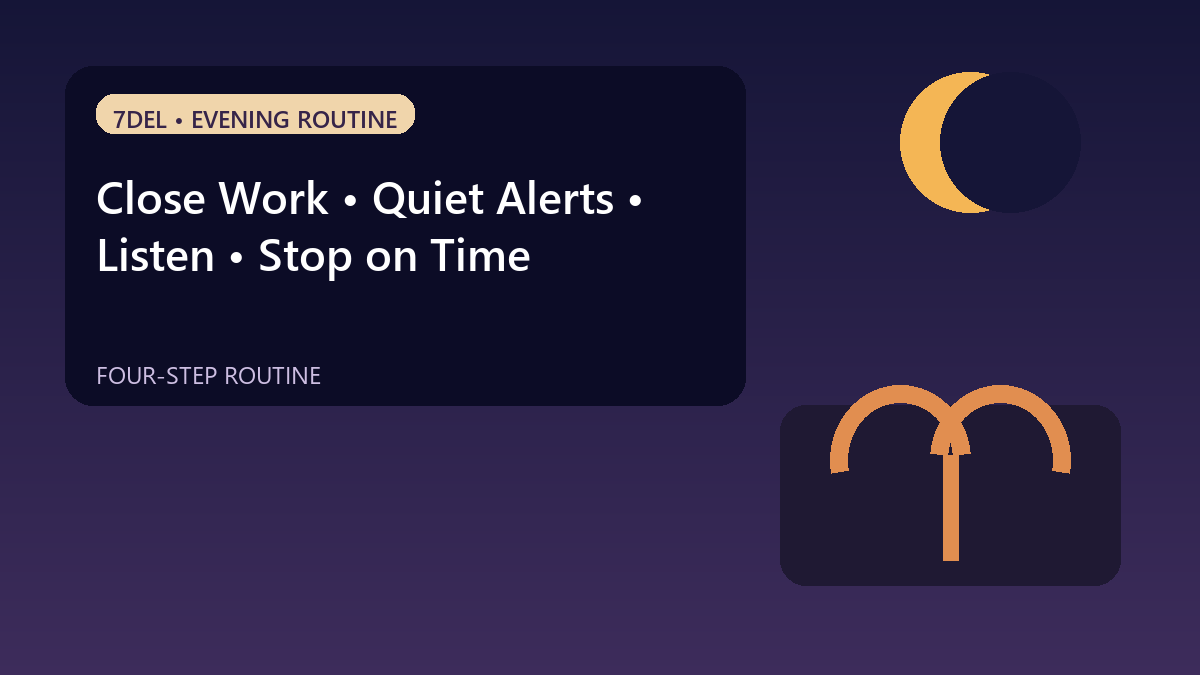
Use a few actions that can happen in the same order most evenings. The times below are examples, not medical guidance or a required schedule.
| Step | Action | Boundary |
|---|---|---|
| 1 | Close work tabs and write tomorrow’s first task. | Do not start a new project. |
| 2 | Dim unnecessary screens and enable a quiet mode. | Keep essential communication available. |
| 3 | Start the downloaded audiobook in one chosen place. | Do not browse for another title. |
| 4 | Use a timer or chapter boundary. | Stop at the planned point. |
If a busy evening breaks the sequence, restart at the next sensible step. The routine should reduce decisions, not create a new source of guilt.
Protect the work-to-evening boundary
Unfinished work often follows people into the evening because the next action is unclear. Before listening, write one concrete starting task for tomorrow, then close the tools used for work. The site’s broader guide to balancing productivity and burnout risk can help you review the work side of that boundary.
Keep the listening goal modest. One chapter or 20 to 30 minutes is easier to repeat than a plan that requires finishing a long section every night. If the story feels too tense, confusing, or engaging for the time of day, choose a different title rather than forcing the format.
Keep the routine supportive, not clinical
A routine can organize the environment, but it should not make medical promises. The National Heart, Lung, and Blood Institute provides an official overview of healthy sleep habits. Use authoritative guidance for health decisions and view the audiobook as one optional leisure activity.
For a wider planning framework, the site’s article on building a mental wellness routine can help you think about consistency and support. Do not replace professional care or an existing treatment plan with a listening schedule.
Review the routine after one week
After several evenings, ask simple questions: Was the title ready before the routine started? Did the timer work? Did notifications stay quiet? Was the volume comfortable? Did the plan fit the household? Change one friction point at a time. The useful outcome is a routine you can choose again, not a perfect streak.
Frequently asked questions
How can I keep an audiobook from running all night?
Use a playback timer or choose a chapter boundary before starting. Test the timer earlier in the day and confirm that your app saves the listening position.
Are all classic Western recordings free to reuse?
No. The underlying text and a particular narration or recording can have different rights. Verify the exact edition, recording, jurisdiction, and service terms before downloading or reusing a file.
What if a screen-light routine does not fit my evening?
Shorten it, move it, or choose another quiet activity. A routine should adapt to essential communication, household needs, accessibility, and qualified health guidance.

0 Comments